Thermal
Spray Metallizing
City Skyline

Thermal Spraying or metalizing is the most effective and durable method available today for applying a protective coating to
standing steel structures such as bridges. LTL Galvanizers (Pvt) Ltd has the technology to apply Zn, Al, and Zn/Al alloy metallic
sprays using thermal spray technology.

What is Thermal Spraying?

  • A set of coating processes using finely divided metallic or non-metallic materials are deposited in a molten or semi-molten state to form a coating on a given surface
  • The coating material may be in the form of powder, ceramic rod, wire or molten materials
GALVANIZERS AWARD WINNING

Metallizing Process

  1. Abrasive Blasting
  2. Zinc/Al/Zinc-Aluminium Spraying
  3. Application of Sealer coat
  4. Application of top Paint Coats

Electric Arc Wire Spraying – Metallizing

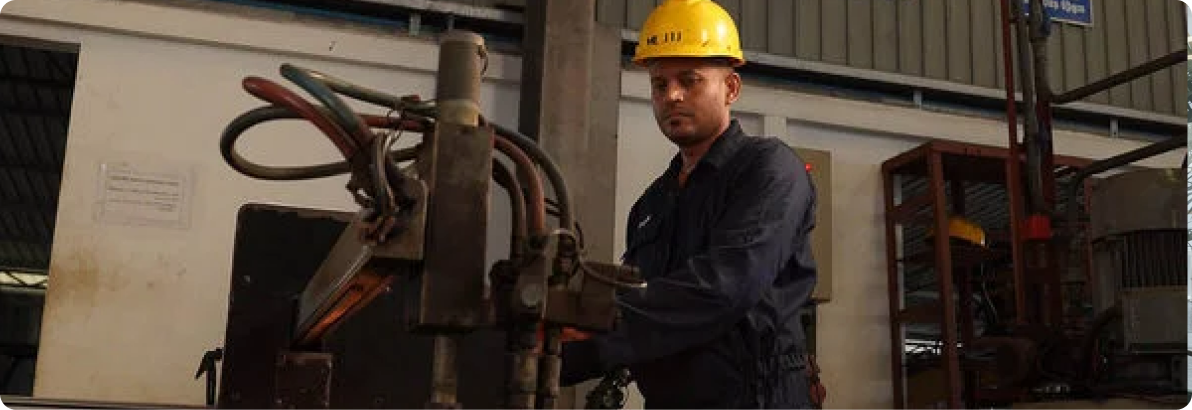
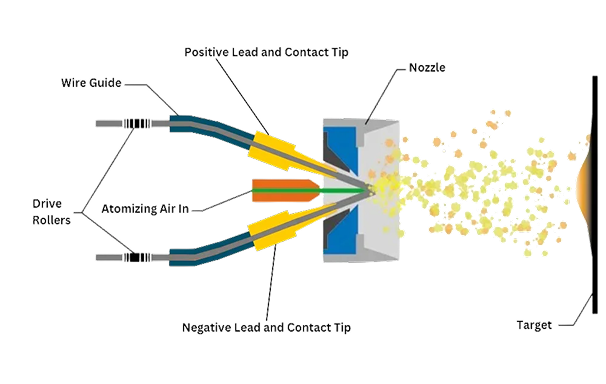
This is a thermal spray process where an electric arc is created between two electrodes made of consumable coating material. The material is heated by the arc, atomized by highly compressed gas and propelled onto the surface being treated.

Metallizing Process Diagram

Advantages of
Metallizing

  • Metallizing is the most versatile and effective option for
    applying a protective coating to already fixed
    structures such as bridges.
  • The life cycle cost is lower than that of painting.
  • The shape and size of the structure is no barrier to the
    delivery of an effective coating.
  • Metallizing provides a higher bond strength when
    compared with painting.
  • Higher service life compared with painting.
  • There is no limit to coating thickness as in Hot Dip
    Galvanizing.

Quality Assurance

  • Thermal Spraying of Zinc and Zinc-Aluminium alloy is
    done in accordance with the ISO 2063:2019 standard.
  • Metallized coating thickness is greater than the
    minimum coating thickness as mentioned in Table B.1 of
    ISO 2063:2019.
  • Metallized coating thickness and thickness of sealer
    coats can be customized according to the requirement
    of the customer and according to the Environmental
    conditions where the item is installed.
  • Adhesion tests of coating can be done if requested by
    the customer.
  • Painting over metallized surface is done under the
    guidance of a certified paint specialist and in
    accordance with Table A.8 of ISO 12944-5:2007.

Real Applications of
Metallizing

C5 Environment – Coastal Areas and Industrial Areas

  • Zn/Al metalizing is the most suitable coating method for the C5 Environment. A top primer and one or two paint coats are typically applied as sealers during metalizing.
  • Metalizing is the ideal process for corrosion protection when restoring already-built bridges and other large structures that cannot be submerged in a galvanizing bath

Corrosion Performance Study

U.S. Federal Highway Administration (FHWA) Research, Development, and Technology

  • The Ohio Department of Transportation has applied 85% zinc/15% aluminum alloy to approximately 10 bridges over the past 8 years with no reported failures.
  • These bridges have 200 µm of metal by specification and are sealed with a clear phenolic topcoat.
  • Ohio has developed a detailed specification for the application of metallized coatings and has recently.

Inspection

Environmental condition

  • Humidity test
  • Surface temperature

Surface Condition

  • Abrasive test
  • Salt contamination test
  • Surface Profile test
  • Dust test

Coating thickness

  • DFT Testing
  • WFT Testing
  • Cross Hatch testing
  • Pinhole detection testing
Top